Event registration that actually works.
And an app that makes your event unforgettable.
From the first RSVP to the final survey: registration, communication, engagement, and follow-up, all provided by Ventla. Trusted by Svedea, People Partner, AMEC and hundreds more since 2011.
From small kickoffs to summits with 1,000s of attendees, Ventla works at every scale


“The Ventla app was invaluable in producing this event. Attendees loved following the event in real time, creating engagement and energy.”
“It stopped feeling like we were running an event and started feeling like we were hosting one. The room contributed because the room was prepared.”
“Ventla supported us throughout the entire kickoff. It brought clear structure to our communication and made it easier to keep information and interaction in one place.”
One platform for the whole journey, from the first invite to the last thank you
- Event page1
- 2Invitation
- Registration3
- 4Confirmation
- Event app5
- 6Evaluation
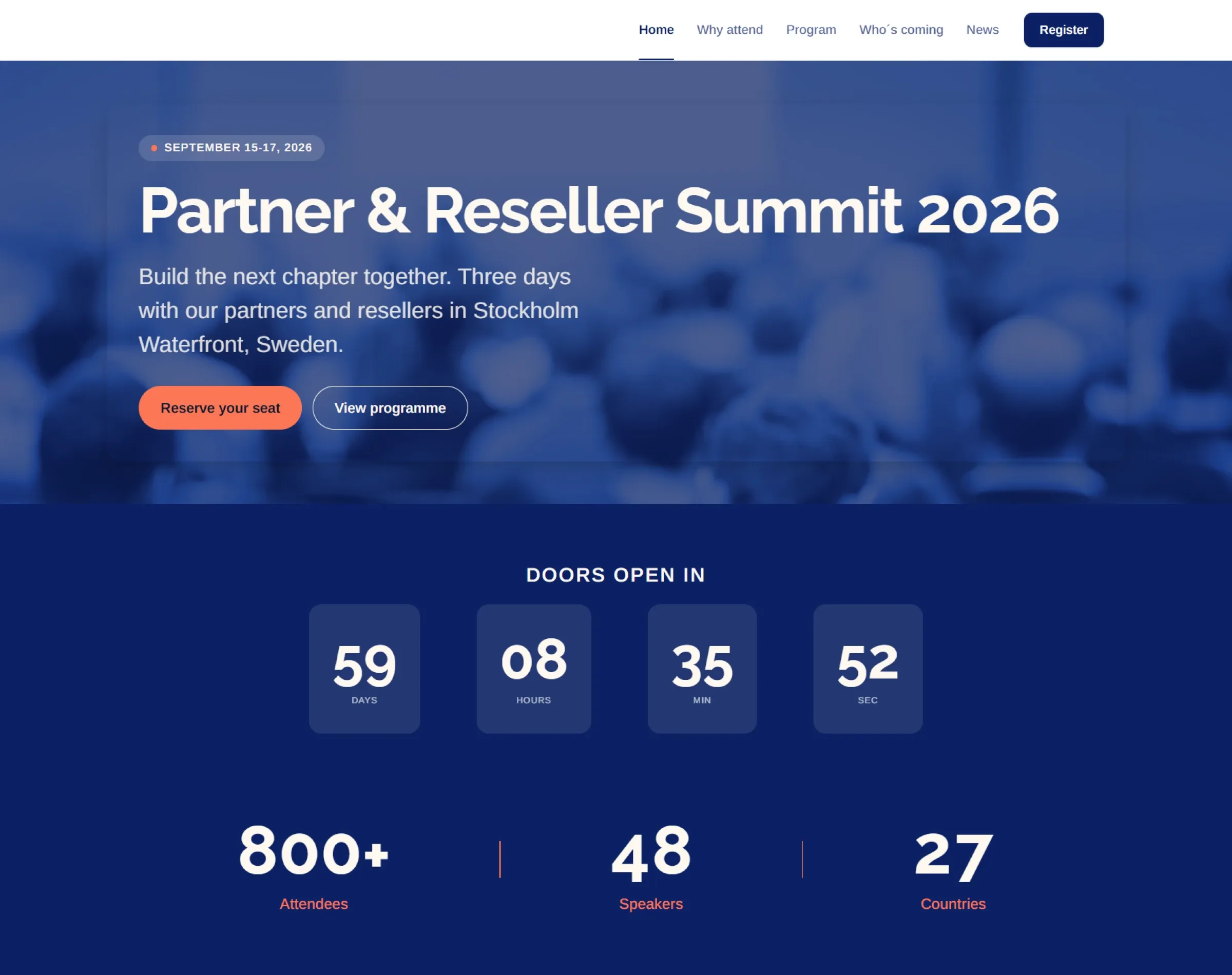
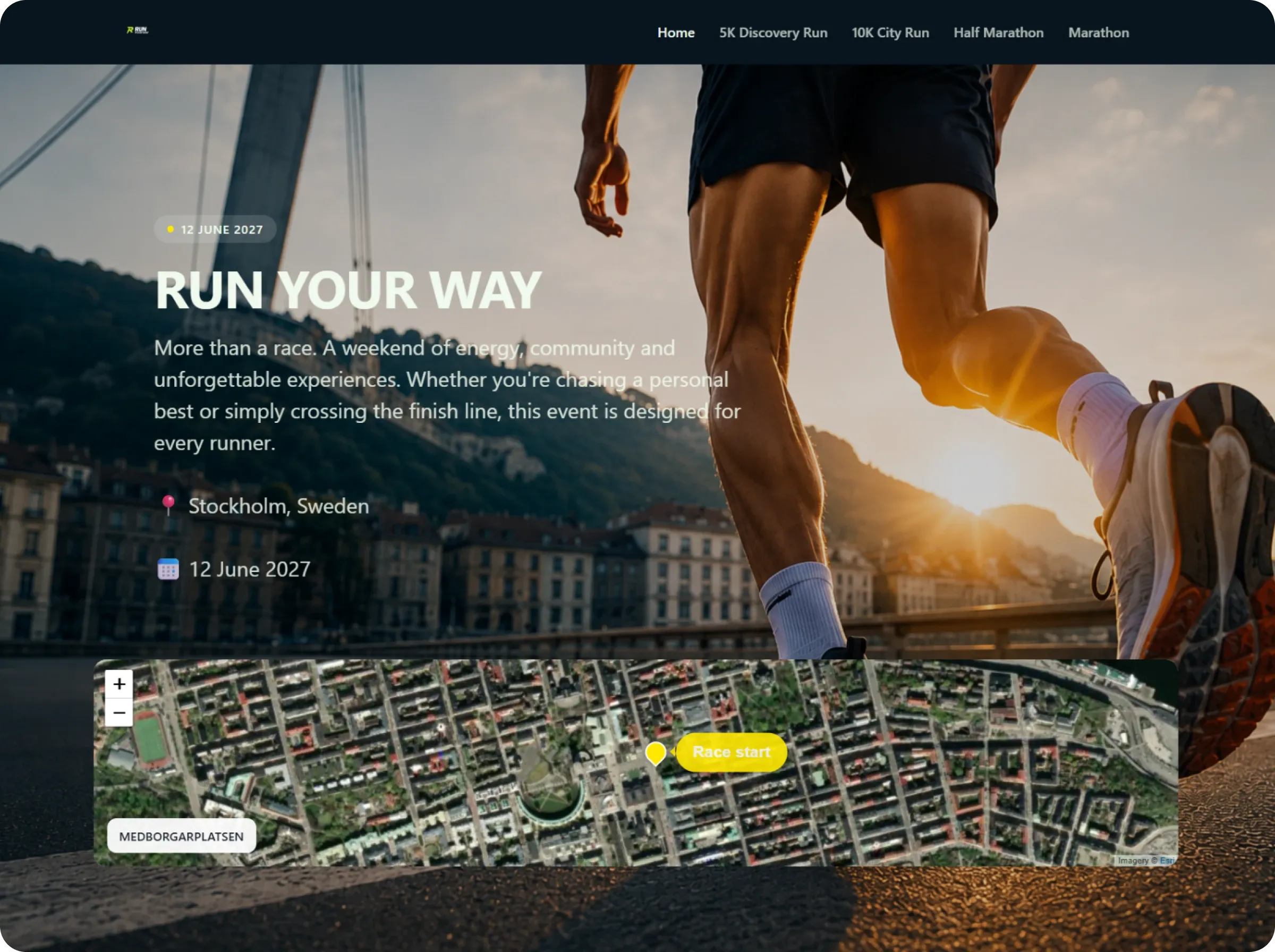
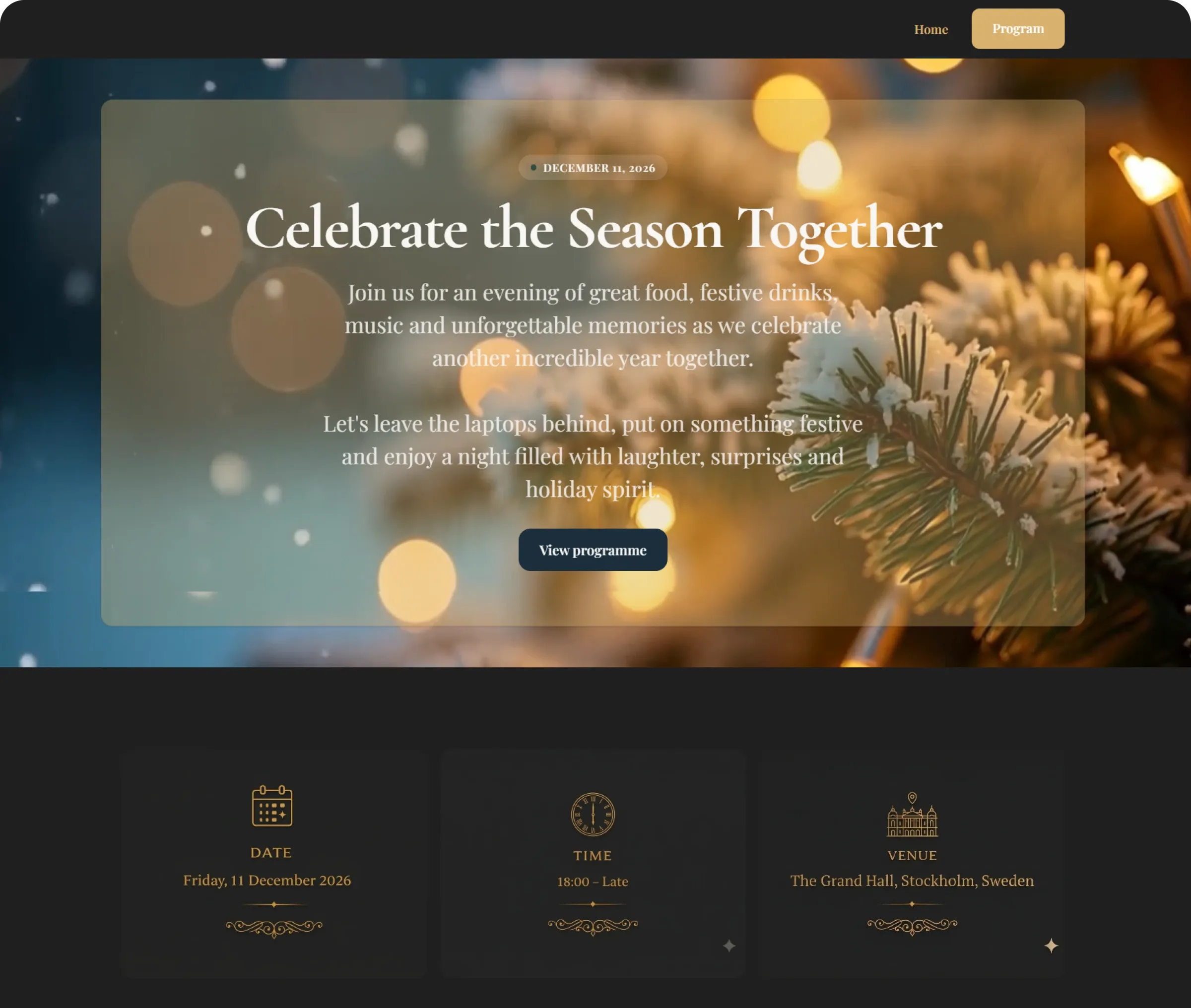
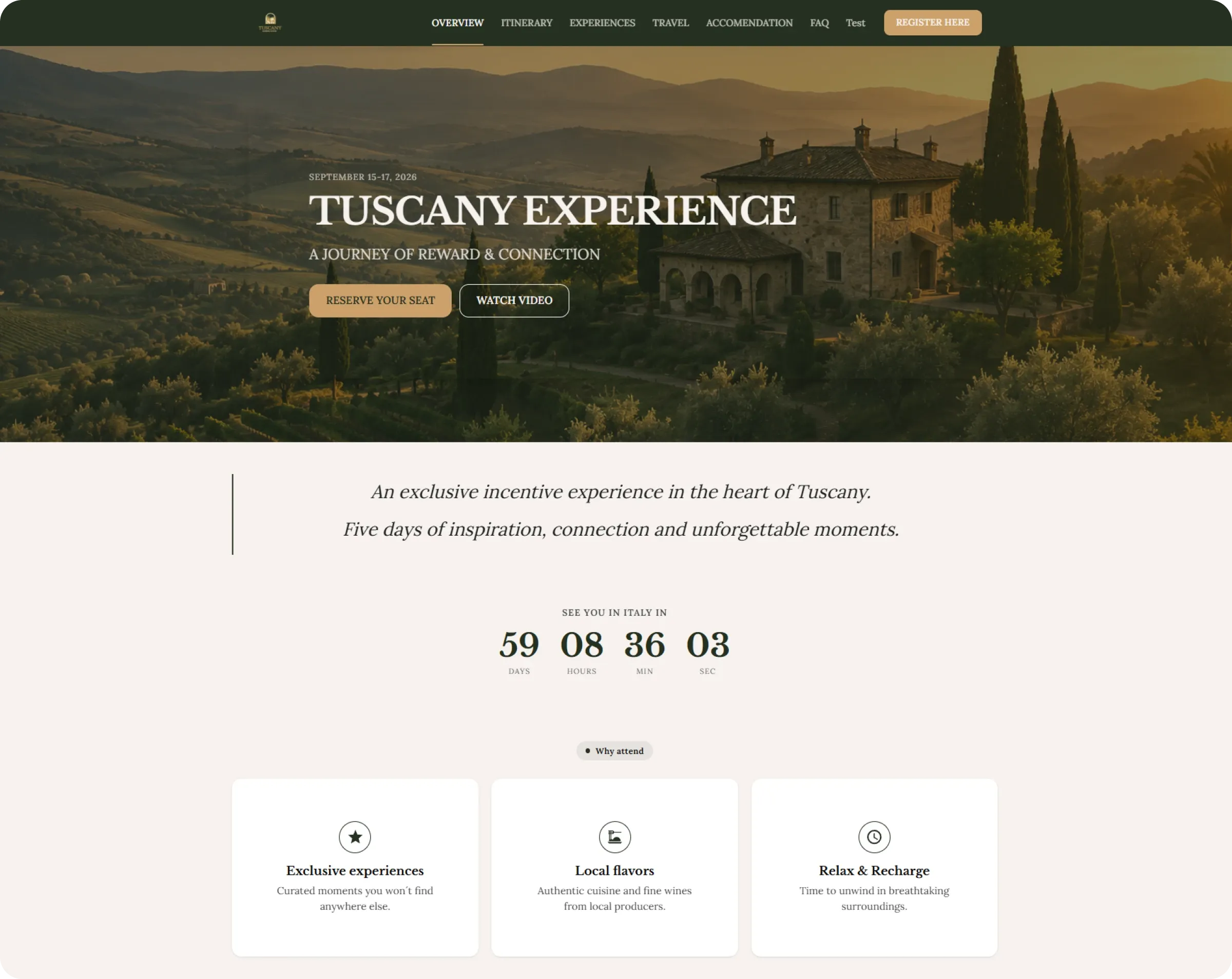
Event landing page
Your event page, now even easier to build and customize
Every event page is built from the same flexible foundation, but no two need to look or feel anything alike. Countdown timers, weather widgets, image galleries, sponsor logos, custom themes and layouts: pick what your event needs and skip what it doesn't. No-code, set up in hours, just with just three levers to make it look like yours.
Event registration
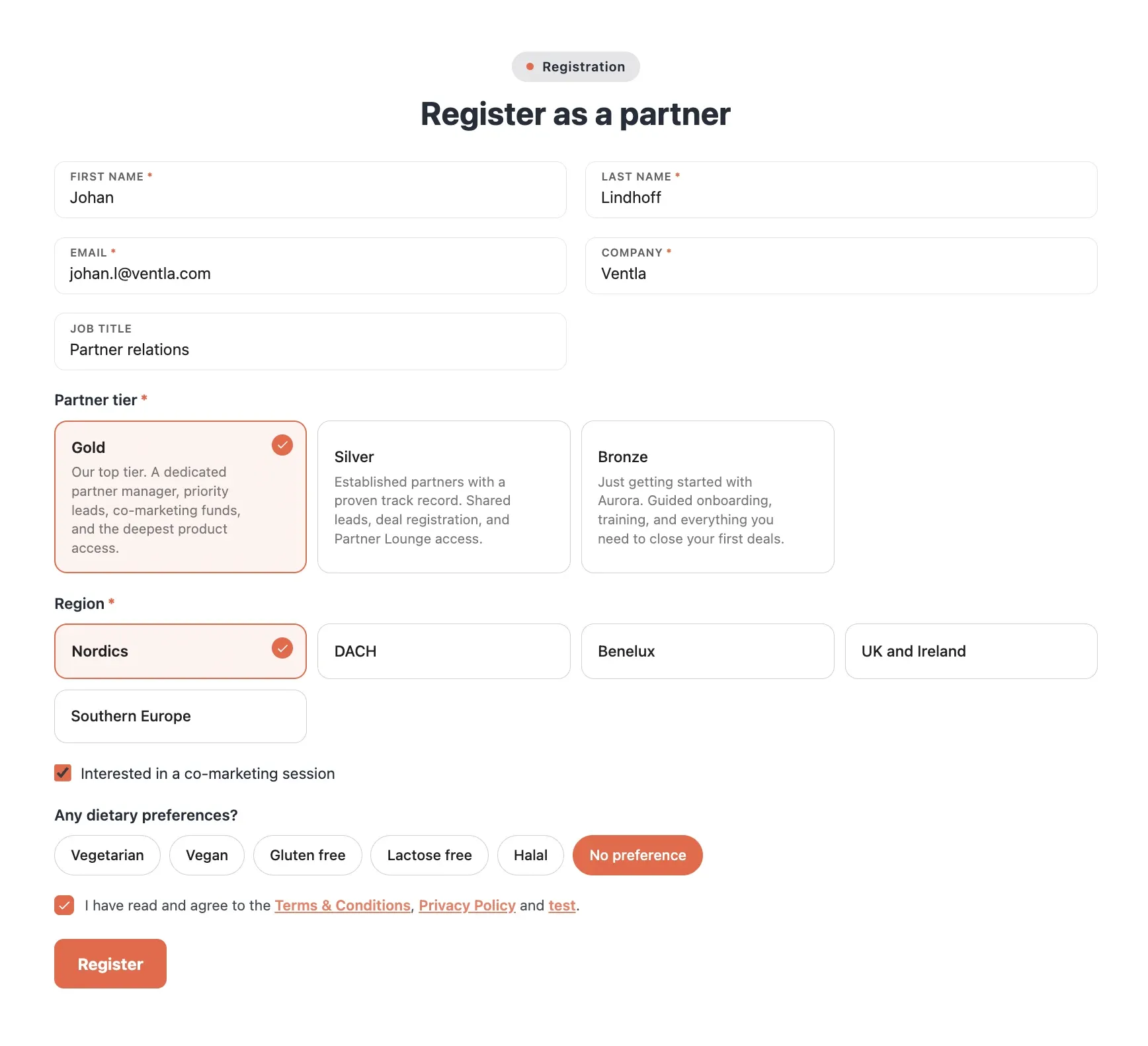
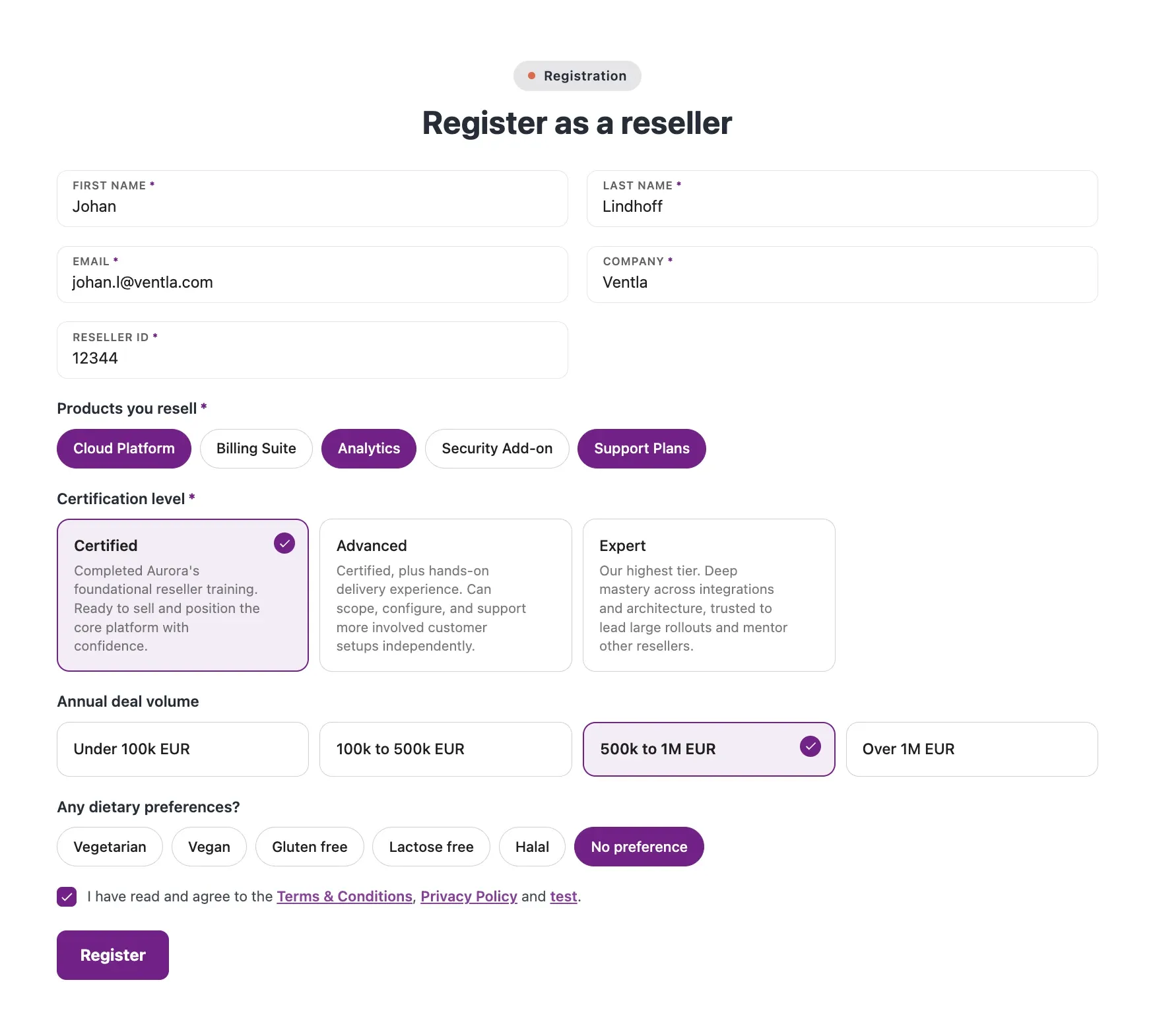
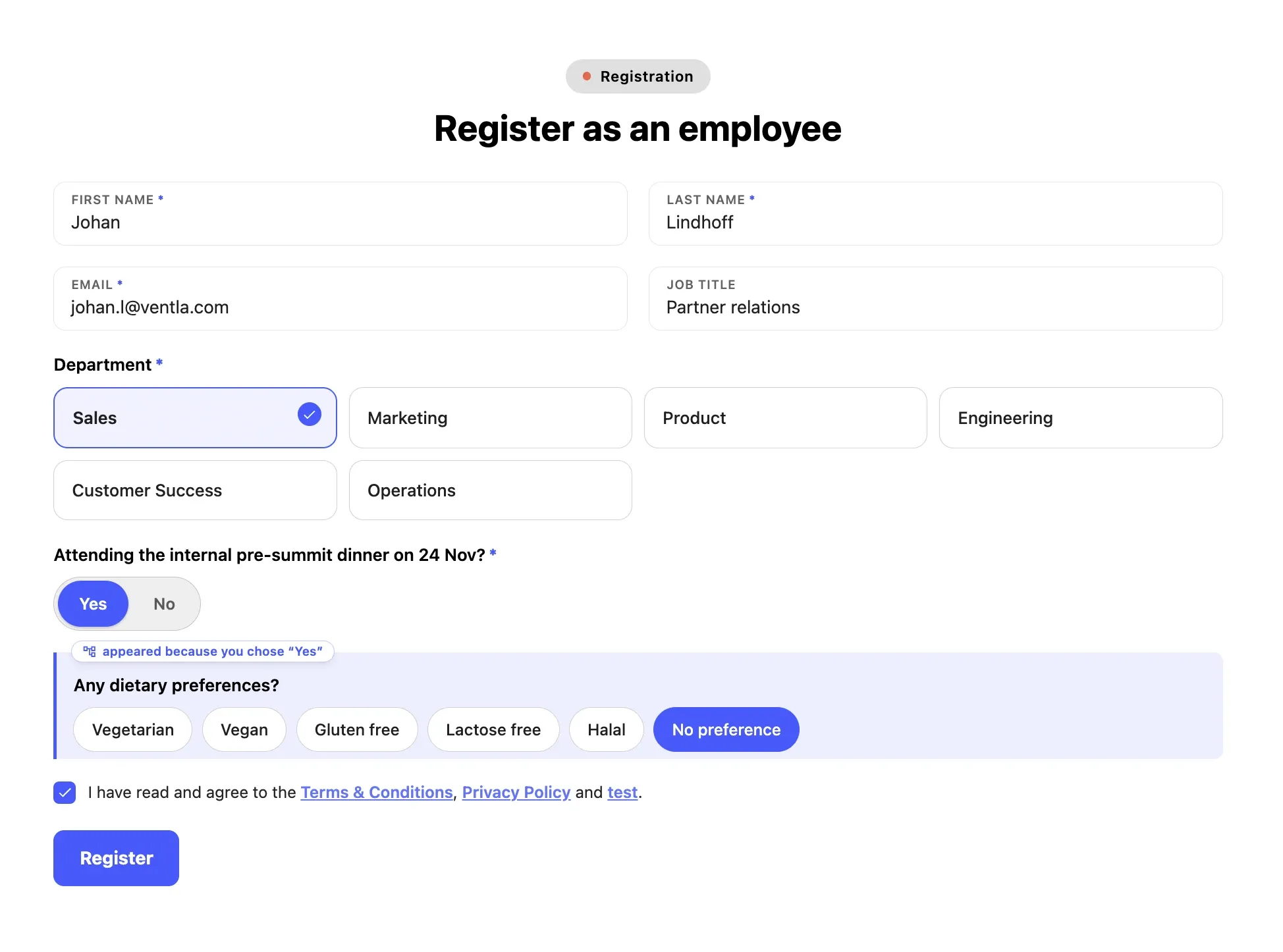
Registration built to handle whatever your event throws at it
Build multiple registration forms on a single event page, add conditional questions that only appear when they're relevant, and manage every attendee in a live, fully flexible list. Filter, edit, and segment however you need, with no row limits holding you back. Everything an attendee shares at registration becomes information you can use later, so you communicate per people and look at them individually instead of the whole list at once.
Event app
An app attendees actually use, before, during, and after the event
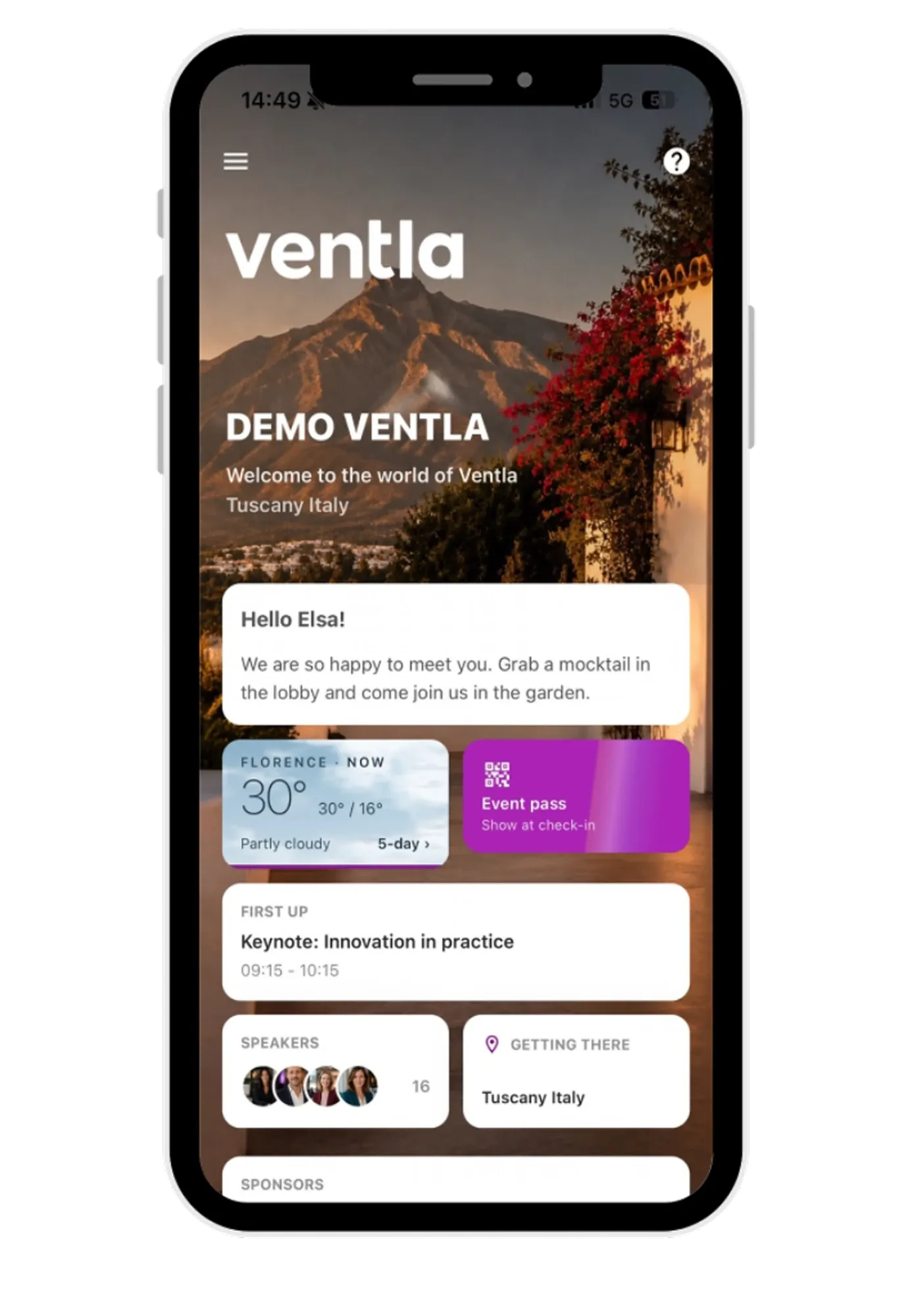
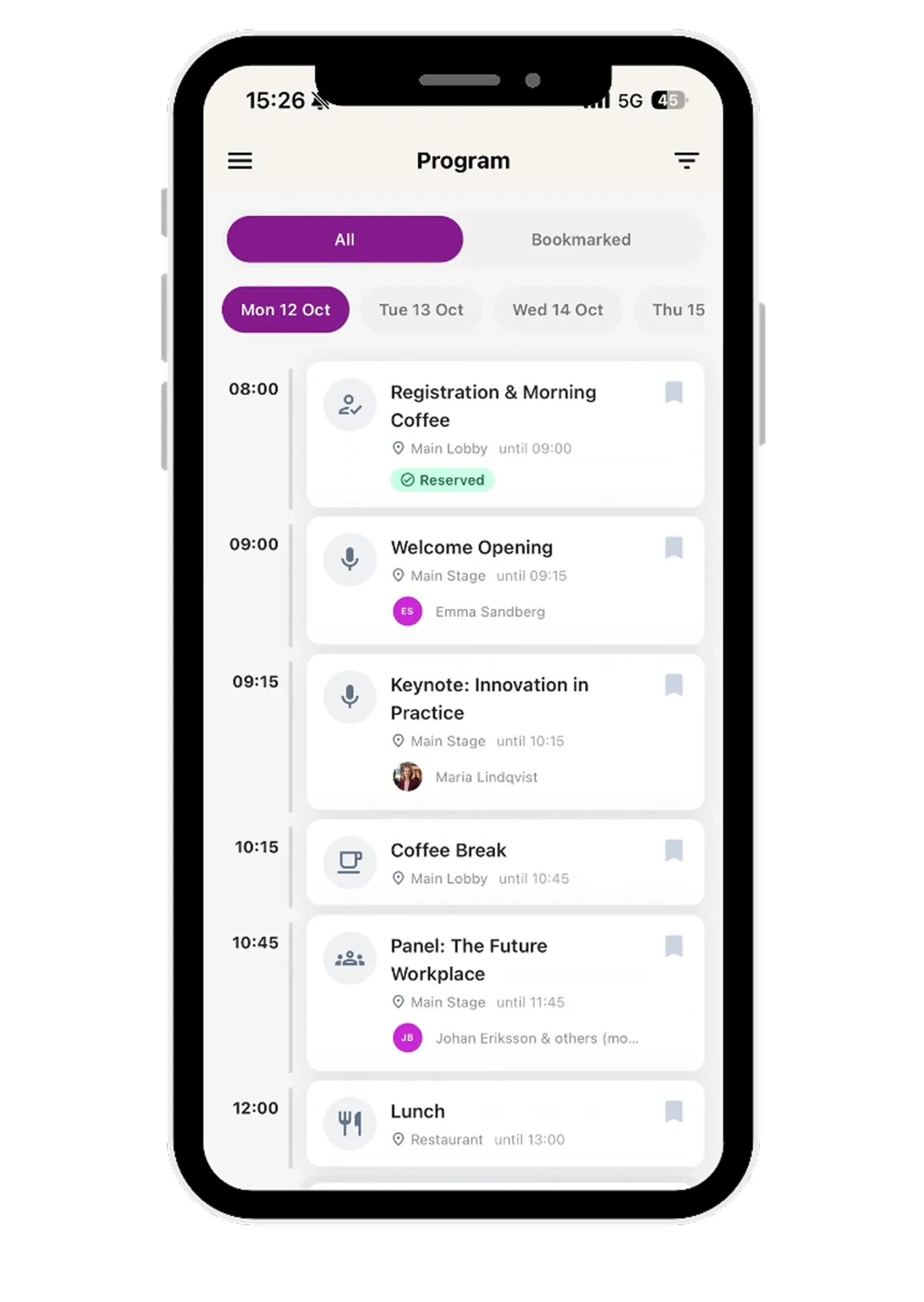
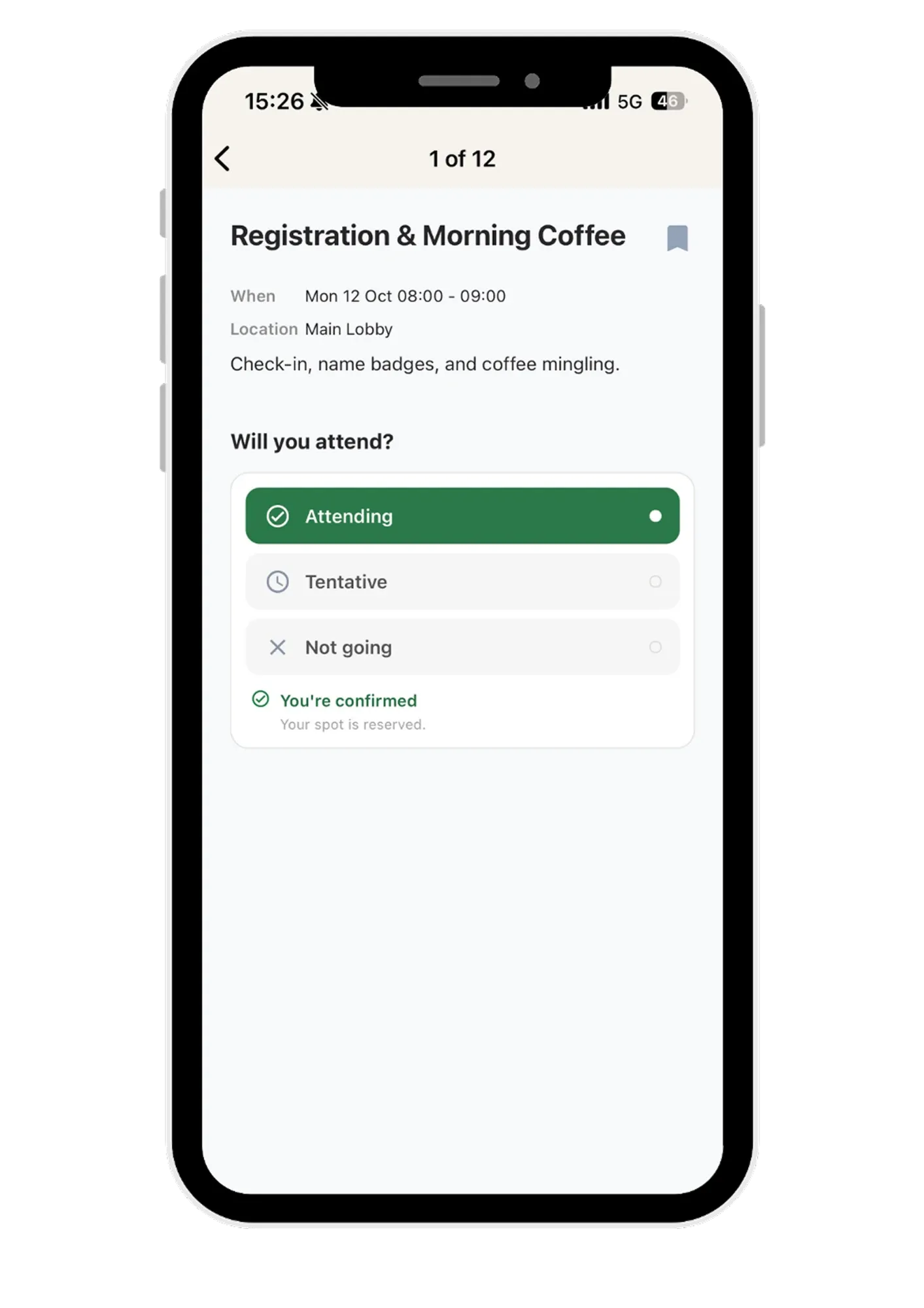
Tap a link in their invitation email or enter a six-digit code: no password to invent or remember. Inside: a personalised agenda they can bookmark and build into their own day, session sign-ups with automatic waitlists, a QR code event pass for the door, live polls and Q&A, participant networking, chat, and a social feed. Works as a native iOS and Android app, and as a browser app for anyone who won't install something for a one-day event. Every feature is optional: turn on what your event needs and leave out the rest.
Evaluation
Close the loop: surveys that actually get answered
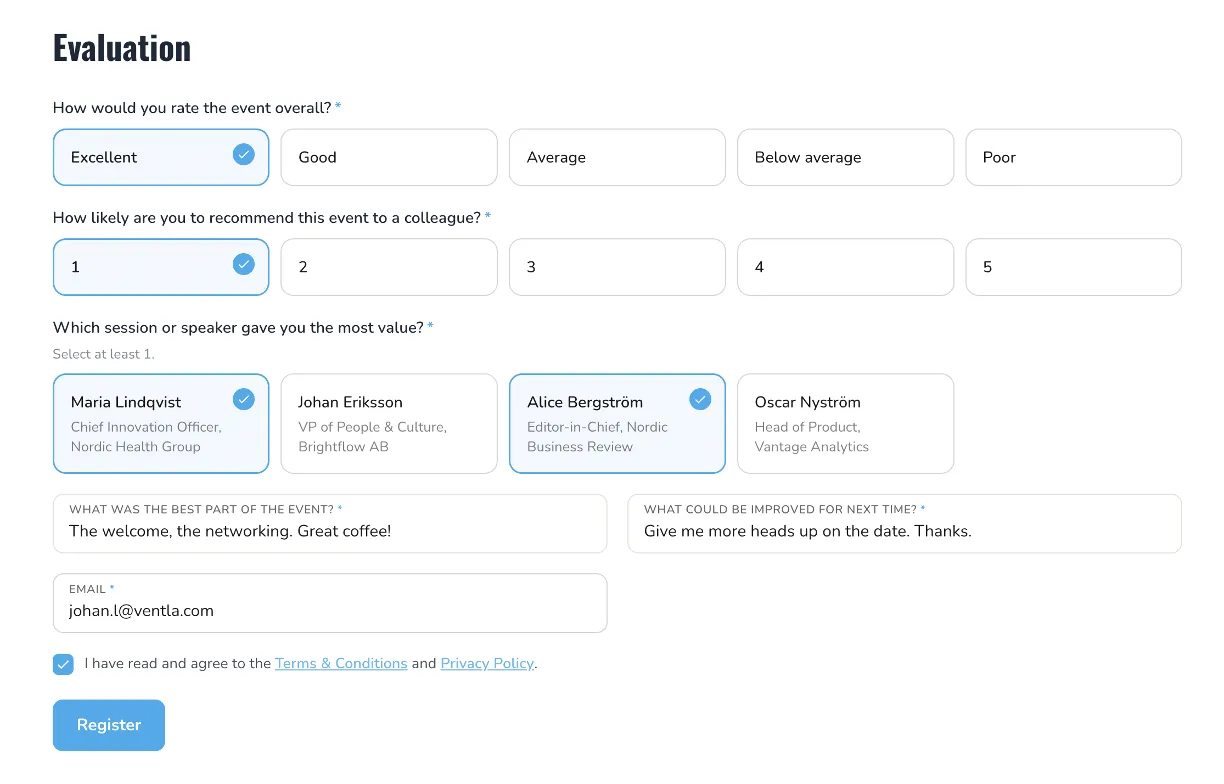
Send a post-event survey through the app and watch responses arrive in real time. Build it with multiple question types: single choice, rating scales, free text, and Q&A, then publish in seconds. Results appear as live charts; export to Excel for your stakeholders or pull a chart straight into a slide. Attach a survey to a specific session so the right feedback lands on the right talk, automatically.
Pick the features your event needs
Start with branded and personalised communication, make it easy with registration and to top engagement add the app. Or use them all for a smooth and unforgettable event.
Registration
A full registration product, not a form embed. Build multiple forms on a single event page with conditional questions. Manage every attendee in a live, flexible list: capacity limits, waitlists, dietary questions, and confirmations handled automatically. Everything a participant shares becomes data you can act on later.
Event Website Builder
A real website builder inside the platform, publishing to a live public URL. Drag blocks onto a live canvas: countdown timers, weather widgets, sponsor logos, image galleries, with undo, redo, and a live preview. Blocks share the same event data as the app, so your program page is never out of date. No code needed, and you can build several sites for one event.
Communication
Send targeted email campaigns and push notifications to the whole event or a specific segment. Personalise every send with the recipient's name, answers, join code, or any event detail. Schedule ahead, link directly to a session, and reach attendees with real-time updates, all in your brand colors and visual identity.
Event App
Native on iPhone and Android, and the same app in a browser for anyone who won't install something for a one-day event. Personalized agenda, practical information, built-in chat, and networking. Attendees sign in with a link or a short code sent to their email: nothing to remember, nothing to reset.
Polls & Surveys
Run live polls, Q&A sessions, and audience voting during your event. Display results live on screens or within the app. Send post-event surveys and export results to Excel for analysis and reporting.
Segments
Name a rule once (for example, everyone from Norway attending the Tuesday workshop) and the list keeps itself current as people register and answer.
Attendee Management
One profile per person with their answers, their activity, and their status. Import a spreadsheet, edit in bulk, and export at any point.
Check-in and QR Scanning
Scan people in at the door, at a session, or at a stand. Attendees show their own code, staff scan it, or reception checks someone off by hand.
Room Matching
A guided tool for pairing people into shared hotel rooms, built for the trips and conferences where someone currently does this in a spreadsheet.
The Portal
A separate, lighter app for everyone who helps run your event without needing admin access. Speakers, sponsors, and exhibitors write their own bio; door staff and volunteers turn their phone into a check-in scanner via a link that works offline.
Connect your AI via MCP
ChatGPT, Claude, and Copilot connect to your event data through a standard MCP connection. Set an organization ceiling (read, or read and write), then grant access person by person with an expiry date. PII redaction masks names, emails, and sensitive fields in everything the assistant reads. Everything is off until you turn it on.
Made for both sides of the table

For In-House Teams
One platform for every event on your calendar
Whether you're running a 50-person leadership offsite or a 1,000-person annual conference, Ventla gives your team everything in one place: registration, communication, the participant app, and post-event data. Set up in hours. Managed without a tech background.

For Event Agencies & Partners
The platform your agency can build a service around
Ventla partners package the platform into every event they produce: registration, app, and engagement as a single offer to their clients. White-label, modular, and fast to set up. You bring the production. We handle the tech. Your clients remember the experience.
Real events, real results
From agency-produced conferences to in-house team kickoffs, here's what actually happened
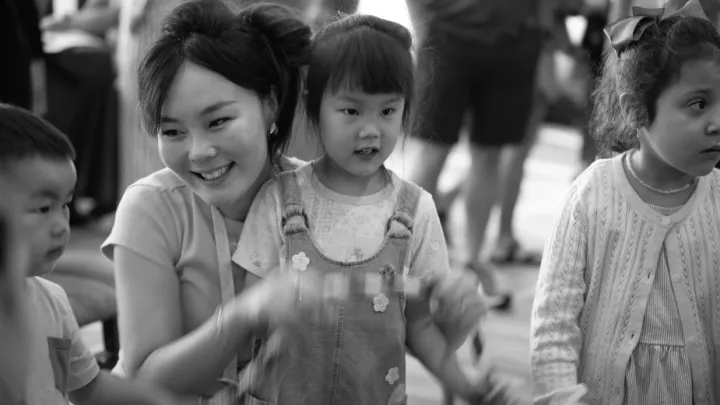
IFCR
A rare disease conference with a near 100% app download rate
The International Foundation for CDKL5 Research ran their family and researcher conference on Ventla for the first time. Almost 100% of attendees downloaded the app.
- Conference
- Families & researchers
Read the story →
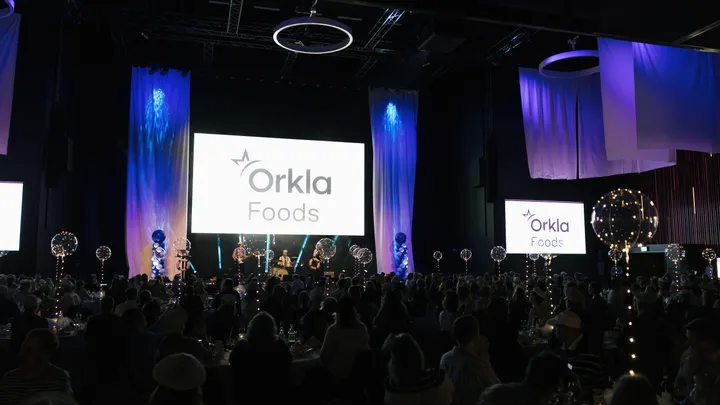
Orkla Foods Sweden / Perfect Event
How Ventla unified information and created participation across Orkla's kickoff
When Orkla Foods, together with event agency Perfect Event, gathered employees for a kickoff, Ventla was used as a shared platform for information, interaction, and ongoing communication: before, during, and after the event.
- Kickoff
- 99.4% app adoption
Read the story →
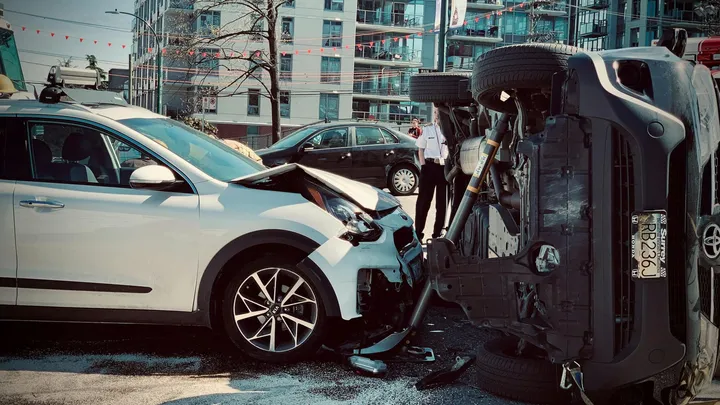
Svedea / Orangutang
A kickoff that scored 9.3 out of 10, and started six months before anyone even knew where they were going
Svedea ran a two-day kickoff for 240 employees in Sundsvall on Ventla. Engagement built over six months, with an overall score of 9.26 out of 10.
- Kickoff
- 240 attendees
Read the story →

Audi Sweden / People Partner
Three hotels, 180 attendees, personal schedules. How Ventla kept it all together.
People Partner used Ventla to run Audi Sweden's annual dealer conference in Åre: 180 attendees, three hotels, and several parallel groups, coordinated in one platform.
- Dealer conference
- 180 attendees
Read the story →
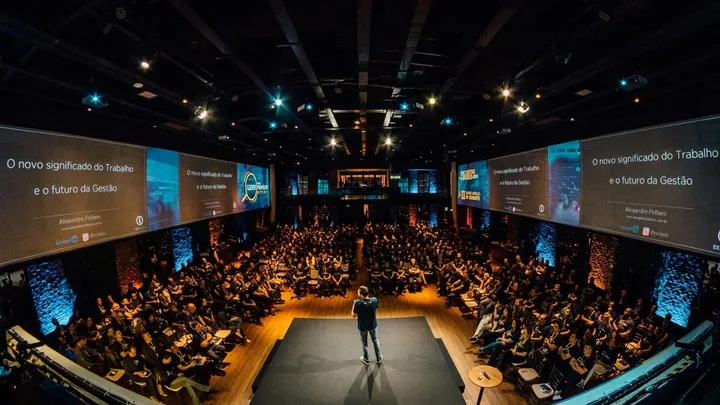
AMEC
How AMEC turned their annual summit into a fully measurable event
AMEC, the international body for communications measurement, used Ventla at their Sofia summit to get the engagement data, sponsor activation, and on-demand content strategy they needed.
- Summit
- Communications industry
Read the story →
Nobia
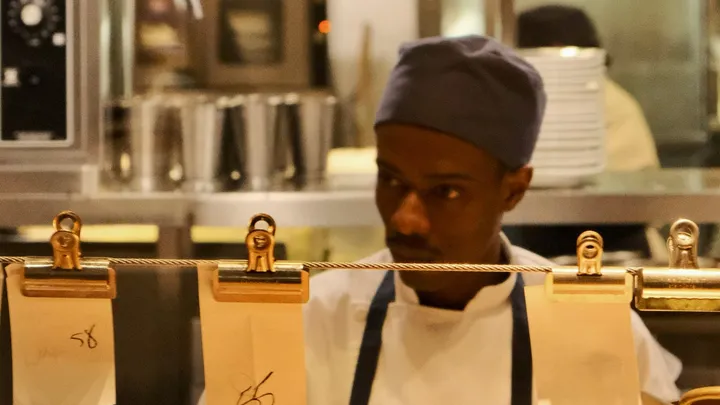
When the opening of a factory needs to feel like an event
Nobia's inauguration of Europe's most modern kitchen factory used Ventla for segmented communications across leaders, retailers, and partners. Two days, two sites, one platform.
- Inauguration
- Multi-segment
Read the story →
LF Fastighetsförmedling / LIWLIG
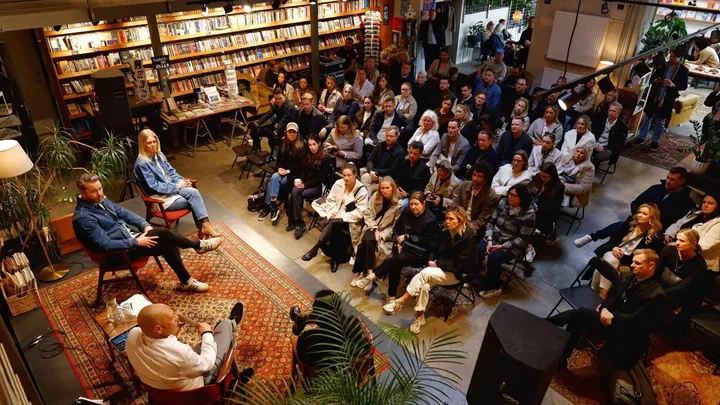
A whole ship full of a 20th anniversary
Event agency LIWLIG ran LF Fastighetsförmedling's 20th anniversary on Ventla: every employee aboard M/S Birka Gotland from Stockholm to Tallinn, three days at sea, parallel programme tracks and individually chosen activities in one app.
- Anniversary cruise
- Baltic Sea
Read the story →
Every experience begins with your story
A 30-minute conversation with someone who has launched hundreds of events. We'll map Ventla to yours: before, during, and after.
Book a demo